
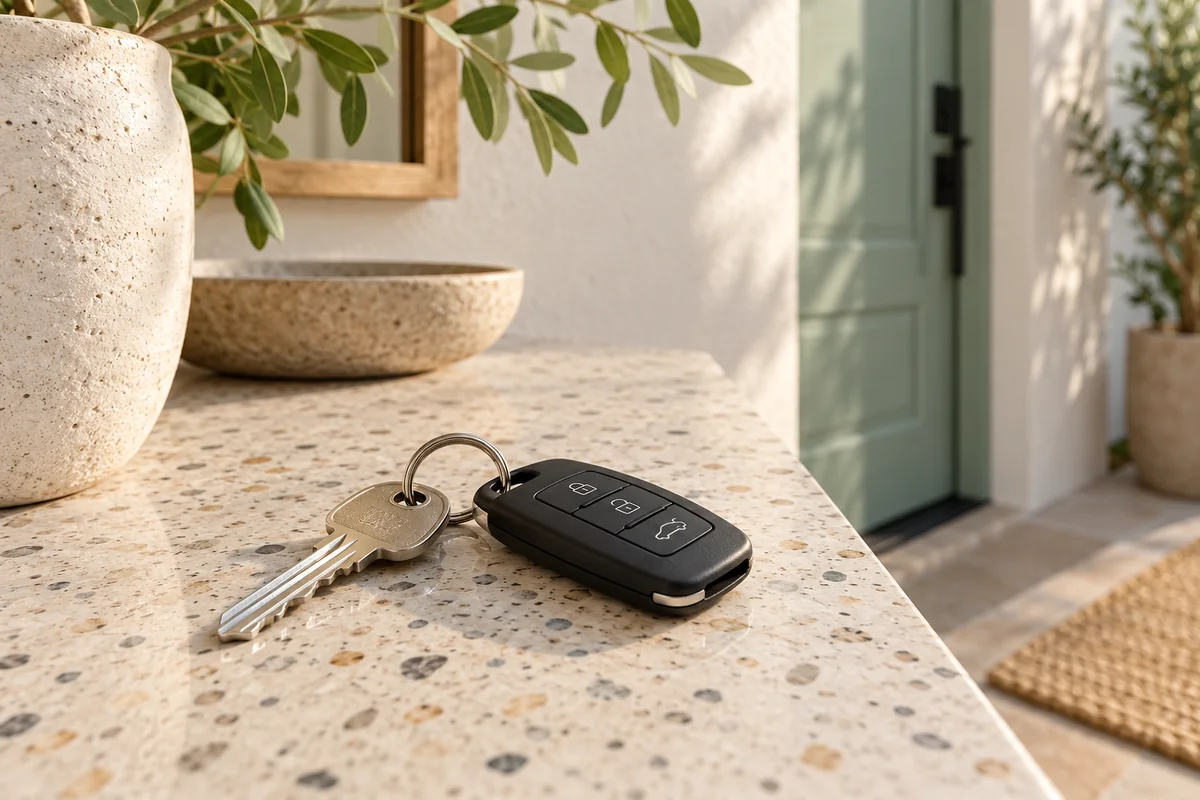
Start with the access you want to end
A lost spare, a completed tenancy or a change of staff may leave keys outside your control. Identify the doors those keys could open. If the same old key works a second entrance, that cylinder needs to be part of the conversation too. When the key history is uncertain, explain what you do know rather than assuming every lock shares the same arrangement.
The change happens inside the cylinder
In a compatible lock, a rekey alters the internal key arrangement so a different key operates it. The outer handle may remain. This requires suitable hardware; a worn cylinder or another fault can make a different approach necessary. If the latch already catches or the key binds, include those observations and read about lock repair before treating the request as a key change alone.
Shared keys need a wider conversation
Do not arrange a change to a lobby or shared entrance as though it were your unit door. Other residents or staff may depend on that key, and the responsible building contact needs to direct the decision. Even inside a private unit, ask whether the lock belongs to a managed key arrangement. The permission guide is a useful place to begin when ownership and day-to-day use differ.
Finish with an actual key plan
Count the people authorized to keep the new keys and confirm the number supplied. Ask which cylinders will reject the old key after the work. One key for several doors may be possible only where the systems are compatible; appearance is not a test of that. Label the finished spares by their intended use and store them thoughtfully. A tidy keyring should reflect the agreed doors, not conceal one that was missed.